This reel has a limited one-year warranty. For more complete
warranty information, visit our web site at:
www.shakespeare-shing.com
Le moulinet possède une garantie limitée d’un an. Pour plus
d’information concernant la garantie, veuillez consulter notre
site web : www.shakespeare-shing.com
Este carrete tiene un límite de un año de garantía. Para información más
completa sobre la garantía, visite nuestro sitio Web en:
www.shakespeare-shing.com
Casting Instructions
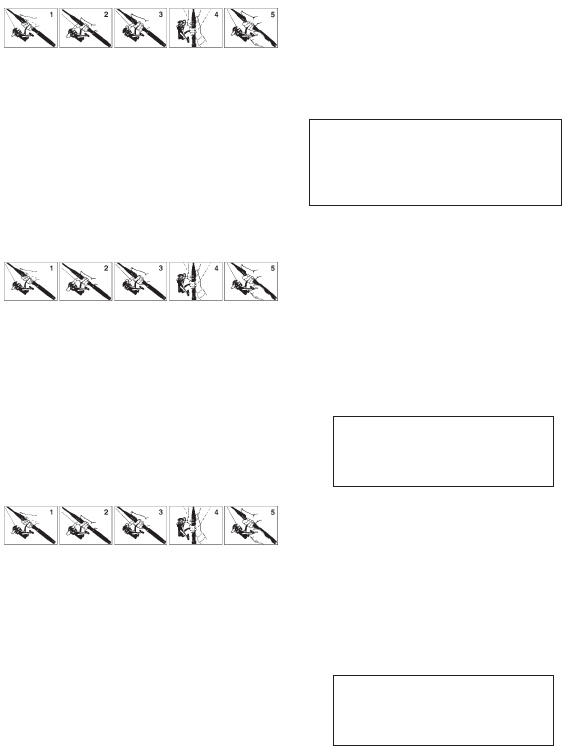
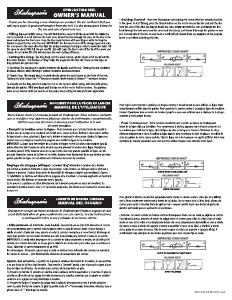
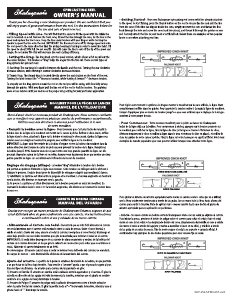
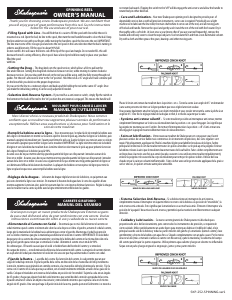
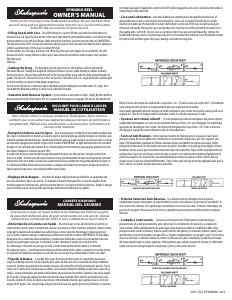
1. Hold rod with reel under rod. Thumb along top of rod aids in control and
casting accuracy.
2. Pick up the line with tip of index nger.
3. Open bail wire with light downward movement until it is in position shown
here for casting.
4. Cast with the wrist movement shown. Let line slide o the nger on forward cast to make lure y
straight out.
5. Stop the ight of the lure by placing nger on spool ange to drop lure in water with minimum
disturbance. Start the retrieve by cranking the handle forward. The bail will automatically close and
pick up line. In retrieving, crank the handle at a speed desirable for the type of lure you are using and
for shing conditions.
• Tips On Baits - There are many articial baits on the market for game sh. They can be classi-
ed into specic types of lures A few of the most popular are as follows:
Spinners. These baits are easily identied by a revolving, whirling blade. When drawn through the
water, these baits not only attract by motion, but send out vibrations. These baits can be shed in
lakes or streams and are proven sh getters. Try letting this bait sink and retrieve it with irregular
speeds without getting caught on the bottom.
Instructions pour le lancer
1. Tenez la canne à pêche avec le moulinet vers le bas. Vous pourrez placer votre pouce sur le dessus
de la canne pour plus de contrôle et de précision lors du lancer.
2. Rapportez la ligne avec le bout de votre index.
3. Ouvrez le l du pick-up avec un mouvement léger vers le bas jusqu’à ce qu’il soit dans la position
illustré ici pour le lancer.
4. Eectuez votre lancer avec un mouvement du poignet tel qu’illustré. Permettez à la ligne de glisser
sur votre doigt lors d’un lancer vers l’avant pour que le leurre s’envole droit devant.
5. Arrêtez l’envole du leurre en plaçant votre doigt sur la bride de la bobine pour que le leurre tombe
dans l’eau avec un minimum de dérangement. Débutez la récupération en tournant la poignée vers
l’avant. Le pick-up se fermera automatiquement et récupérera la ligne. Lors de la récupération,
tournez la poignée à une vitesse désirable pour le type de leurre que vous utilisez et les
conditions de pêche.
• Conseils sur les appâts - Il existe plusieurs appâts articiels sur le marché pour le poisson
sportif. On peut les classier en trois types spéciques de leurres. Quelque uns des plus populaires
sont : Cuillère tournante : Ces leurres sont facilement identiés par une lame tournoyante et rotative.
Lorsque ces leurres sont tirés dans l’eau, ils attirent les poissons non seulement par le mouvement
mais par les vibrations qu’ils transmettent.
Instrucciones de Lanzamiento
1. Tenez la canne à pêche avec le moulinet vers le bas. Vous pourrez placer votre pouce sur le dessus
de la canne pour plus de contrôle et de précision lors du lancer.
2. Rapportez la ligne avec le bout de votre index.
3. Ouvrez le l du pick-up avec un mouvement léger vers le bas jusqu’à ce qu’il soit dans la position
illustré ici pour le lancer.
4. Eectuez votre lancer avec un mouvement du poignet tel qu’illustré. Permettez à la ligne de glisser
sur votre doigt lors d’un lancer vers l’avant pour que le leurre s’envole droit devant.
5. Arrêtez l’envole du leurre en plaçant votre doigt sur la bride de la bobine pour que le leurre tombe
dans l’eau avec un minimum de dérangement. Débutez la récupération en tournant la poignée vers
l’avant. Le pick-up se fermera automatiquement et récupérera la ligne. Lors de la récupération,
tournez la poignée à une vitesse désirable pour le type de leurre que vous utilisez et les
conditions de pêche.
• Consejos sobre las carnadas - Hay muchas carnadas articiales en el mercado para
pesca deportiva. Estas se pueden clasicar en tipos especícos de carnadas. Algunas de las más
populares se citan a continuación:
• Cucharilla - Estas carnadas son fácilmente identicadas por una hoja giratoria que da vueltas.
Cuando se sumergen en el agua, estas carnadas no sólo atraen por movimiento, sino que envían
vibraciones.
Ces leurres peuvent être utilisés dans des lacs ou des ruisseaux et sont éprouvés comme étant favor-
able à la pêche. Essayez de laisser caler ce leurre et récupérez-le à des vitesses irrégulières sans vous
prendre dans le fond des eaux.
• Leurres ottants - Ces leurres sont conçus pour ressembler à un petit animal tombé à l’eau.
Ils peuvent également imiter un poisson mourant. Ces leurres sautent, barbotent, se tortillent et
sautillent et causent généralement beaucoup d’agitation. Une technique conseillée serait de faire le
lancer dans un endroit désirable et laisser le leurre immobile jusqu’à ce que les ondulations disparais-
sent. Ceci attirera l’attention du poisson. Par la suite, retirez le leurre à petits coups. Finalement,
récupérez le leurre avec des mouvements de vitesses variables.
• Leurres ottants - Ces leurres ont habituellement des grandes lèvres qui permettent au
leurre de plonger lors de la récupération. Il existe également des leurres de plomb qui calent normale-
ment.
• Turluttes - Ces leurres sont utilisés pour rebondir dans le fond des eaux. Il est conseillé de les
utiliser dans un mouvement brusque vers l’avant suivi d’un plongeon. Le truc de la couenne de porc
ou du ver peut se faire avec ce leurre.
• Vers en plastique - Au l des années, ce leurre fut particulièrement eectif pour l’achigan.
Le meilleur conseil pour la pêche avec des vers est de pêcher lentement. Permettez aux vers de traîner
dans le fond de l’eau jusqu’au moment où vous sentez un léger coup venant d’un poisson. La pratique
• Floating Plugs - These were designed to resemble a small animal which has fallen into the
water. It could also “imitate” a dying sh. These baits pop, splash, wiggle, sputter and in general make
a lot of commotion. A good technique is to cast to a likely-looking spot and let the plug stand motion-
less until the ripples disappear. This will hold the sh’s attention. Then begin to “twitch” the bait with
a short wrist action. Finally, retrieve it with varying speeds.
• Diving Plugs - These baits usually have large lips which permit the lure to dive when
retrieved. There are also weighted baits which sink normally.
• Jigs-
Are used to bounce o the bottom. They are best used in a darting-diving motion. The worm
or pork rind trick can be used with jigs also.
• Plastic Worms -
Over the years, this bait has been particularly eective for bass. The best tip
for worms is to sh them slowly. Let them “crawl” along the bottom until you feel a slight tap from
the sh. Practice will tell you whether you have a bite or are simply hung up.
Se puede pescar con estas carnadas en lagos o arroyos y están comprobadas como atrapa peces.
Intente dejar que esta carnada se hunda y regrésela con velocidades irregulares sin que se atasque
en el fondo.
• Muestras Flotantes - Estas están diseñadas para asemejarse a un animal pequeño que ha
caído al agua. Podría “imitar” también a un pez agonizante. Estas carnadas se disparan, chapotean,
menean, chasca y en general causan una gran conmoción. Una buena técnica es lanzar en un sitio
que se vea probable y dejar que la muestra se mantenga sin movimiento hasta que la ondulación
desaparezca. Esto mantendrá la atención del pez. Entonces comience a “tirar” de la carnada con una
pequeña acción de la muñeca. Finalmente, regrésela a velocidades variantes.
• Muestras Sumergibles - Estas carnadas tienen usualmente largos bordes que permiten
que la carnada se sumerja cuando se regresa. También hay carnadas pesadas que se hunden normal-
mente.
• Plumillas - Se utilizan para rebotar contra el fondo. Se utilizan menor en movimiento de
lanzamiento rápido-inmersión. El señuelo de lombriz o piel de cerdo se puede también utilizar con
plumillas.
• Lombrices Plásticas - Con el paso de los años, esta carnada ha sido particularmente efec-
tiva para el róbalo. El mejor consejo para con las lombrices plásticas es pescar lentamente. Déjelas
“arrastrarse” junto al fondo hasta que sienta un ligero golpecito del pez. La práctica le dirá si ha picado
o simplemente están colgados.


Join the conversation about this product
Here you can share what you think about the Shakespeare Crusader Fishing Reel. If you have a question, first carefully read the manual. Requesting a manual can be done by using our contact form.